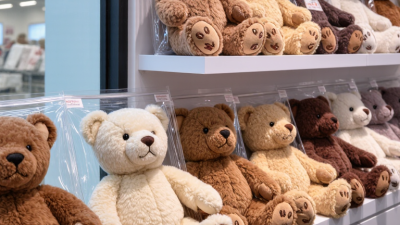
Choosing the best Plush Toy supplier in China requires more than comparing factory prices. Quality, safety, communication, and production experience matter equally.
Grand View Research reports that the global stuffed and plush toys market continues to expand, supported by collectible characters, gifting, and emotional comfort. The Toy Association’s consumer research also shows that plush products remain important across children’s play and adult collecting. These findings suggest strong demand, but they do not prove that every supplier can deliver consistent quality.
Sharon Price John, Build-A-Bear Workshop’s CEO, has often described the company’s purpose as “making memories.” That idea matters to buyers. A plush toy is not only fabric and filling. It may become a child’s bedtime companion, with embroidered eyes, soft seams, and repeated washing. Small defects can damage trust.
The best Chinese supplier should demonstrate documented safety testing, stable materials, transparent production records, and reliable inspection procedures. Buyers should request samples before discussing large orders. They should also examine stitching strength, filling recovery, odor, colorfastness, packaging, and production capacity.
No ranking is perfect. Supplier performance can change with new subcontractors, seasonal pressure, or unclear specifications. Even a polished factory tour may reveal little about daily production. This is where careful verification becomes essential.
This guide will compare practical supplier qualities rather than repeat unsupported claims. It will consider manufacturing experience, customization, compliance awareness, communication speed, minimum order quantities, and after-sales support. A low quotation may look attractive. It may also hide expensive compromises.
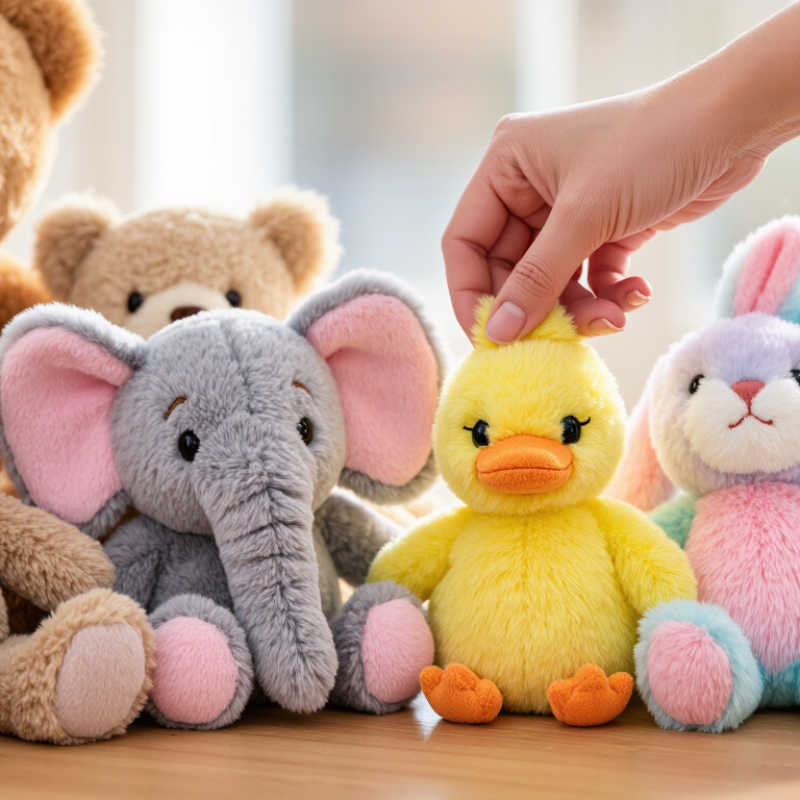
The best plush toy supplier in China is defined by evidence, not attractive catalog photos. A reliable factory shows production records, material certificates, and clear quality procedures. It should explain where polyester fiber, fabric, thread, and stuffing come from. Traceability matters when a shipment contains thousands of soft toys.
Industry demand makes supplier selection more demanding. Circana’s Global Toy Industry report recorded a 7% decline in toy sales across its tracked markets in 2023. In a tighter market, weak quality control can quickly increase returns and waste. A capable supplier checks seams, embroidery, filling weight, color consistency, and small-part attachment during production. It also supports testing against standards such as EN 71, ASTM F963, and ISO 8124, where relevant to the destination market. Certificates alone are not enough.
Look beyond the first sample. Ask for a factory audit, pre-production sample, inline inspection photos, and final inspection records. Grand View Research estimates that the global stuffed and plush toys market will continue growing through 2030, with product safety and customization supporting demand. That growth does not guarantee reliable manufacturing. Lead times should include fabric approval, pattern revision, sampling, and inspection delays. Communication is another practical test. Can the supplier explain a failed color match without hiding the problem? Can it correct a crooked embroidered face before shipment? My own assessment would remain cautious: a polished showroom may conceal inconsistent production. The best supplier welcomes verification, documents mistakes, and improves the process visibly.
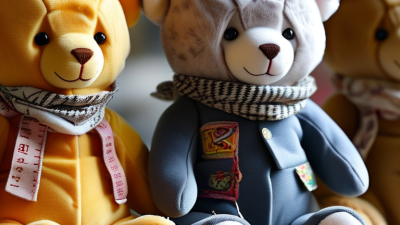
Choosing the best plush toy supplier in China requires more than comparing quotations. Grand View Research estimated the global stuffed and plush toy market at about USD 7.4 billion in 2023. Competition is strong, but inconsistent quality can quickly damage a product launch.
Evaluate the manufacturer’s sampling process, fabric traceability, stitching strength, filling control, and production capacity. Ask for recent test reports covering flammability, small parts, and chemical safety. ISO 9001 certification can indicate structured quality management, but certification alone proves little. Circana reported that U.S. toy sales fell approximately 8% in 2023, reaching USD 28.6 billion. This decline makes accurate forecasting and flexible minimum order quantities more important. A reliable factory should explain lead times clearly, including material delays and rework risks.
Tips: Request three production samples, not only a showroom sample. Inspect seams near the ears, embroidered eyes, and zipper areas. Check whether the factory records needle inspections and batch numbers. Video calls help, but an independent on-site audit is stronger. Also compare defect rates from the last three orders. A supplier may offer an attractive price while quietly reducing filling density. That mistake is easy to miss. I would also test wash durability, even when the product is marketed as decorative. Some factories pass formal checks yet struggle with consistent hand-feel across batches. Ask difficult questions early. Their answers often reveal more than polished certificates.
What Is the Best Plush Toy Supplier in China?
The best plush toy supplier in China is not chosen by price alone. It must prove quality, safety, and controlled production. Ask for a factory profile, recent audit records, and clear production photographs. Confirm who makes the fabric, filling, embroidery, and packaging. A trading office may be useful, but it should disclose the actual factory. Small details matter.
Request material specifications for every component, including fabric, stuffing, thread, dyes, eyes, and plastic accessories. Independent laboratory testing should match the final sample, not an older version. Depending on the destination market, verify applicable requirements such as EN 71, ASTM F963, CPSIA, and chemical restrictions. Check flammability, small parts, seam strength, color migration, and stuffed-material cleanliness. Test before mass production. Then inspect during production and before shipment. Keep sealed samples with dates and batch numbers. This creates useful traceability.
A reliable supplier can explain needle control, metal detection, worker training, and corrective actions without vague promises. Review how rejected toys are isolated and recorded. Visit the facility when possible, or use an independent inspector. Production records should connect raw materials to cartons. An attractive sample can hide weak seams. That risk is easy to miss. I would allow a small pilot order because factory performance may change under volume pressure. No verification system is perfect. Recheck critical points when the design, material, or production line changes.
| Verification Area | Data Dimension | Applicable Standard or Reference | Required Evidence | Recommended Acceptance Benchmark |
|---|---|---|---|---|
| Product Compliance | Target-market safety framework | EN 71 for the European Union; ASTM F963 and CPSIA requirements for the United States; ISO 8124 for international reference | Current test reports matching the exact product, materials, age grade, and intended market | Every required test report must identify the same product construction and materials as the production sample |
| Mechanical Safety | Small parts, attachments, seams, eyes, noses, ribbons, and decorative components | EN 71-1, ASTM F963, or ISO 8124 mechanical and physical properties requirements | Mechanical test report, component list, seam-construction specification, and production inspection records | No detachable hazardous component or accessible sharp point after the applicable mechanical and abuse tests |
| Flammability | Burning behavior of plush fabric, filling, thread, and clothing accessories | EN 71-2 for toys in the European market; ASTM F963 and applicable U.S. flammability requirements for the U.S. market | Accredited laboratory flammability report and material composition declaration | The product meets the flammability limits applicable to its destination market and age classification |
| Chemical Safety | Migration of elements from accessible toy materials | EN 71-3 or the equivalent chemical-migration requirements applicable to the destination market | Laboratory report covering fabric, filling, paint, plastic, metal, printing, and other accessible materials | All tested materials comply with the limits for the relevant material category and product age grade |
| Restricted Substances | Lead, phthalates, azo colorants, formaldehyde, heavy metals, and other restricted chemicals | CPSIA limits for applicable U.S. children’s products; REACH restrictions and SVHC obligations for the European market | Recent chemical test reports, supplier declarations, material safety data, and an up-to-date bill of materials | Results comply with the legal limits of the destination market; REACH SVHC information is supplied when a substance exceeds 0.1% by article weight |
| Lead Control | Lead in accessible components and surface coatings | For U.S. children’s products, CPSIA generally limits lead to 100 ppm in accessible parts and 90 ppm in paint or surface coatings | Component-level lead test report identifying substrates, coatings, and test methods | Each applicable component and coating is below the legal limit for the destination market |
| Material Control | Fabric, stuffing, thread, plastic, metal, and accessory consistency | Approved bill of materials and documented incoming-material inspection procedure | Signed material specifications, approved samples, supplier declarations, and incoming inspection records | Mass production uses only approved materials, colors, trims, and filling types |
| Hygiene and Contamination | Foreign objects, metal fragments, needles, dust, moisture, and storage conditions | Customer quality specification and documented factory process controls | Needle-control policy, metal-detection records where applicable, cleaning schedule, pest-control records, and warehouse inspection logs | No foreign-object contamination; defective or contaminated products are isolated and traceable |
| Dimensional Quality | Finished size, weight, shape, embroidery position, color, and appearance | Approved golden sample, technical drawing, tolerance sheet, and product specification | Pre-production sample approval, in-line inspection records, and final inspection report | Production conforms to the approved sample and documented tolerances before shipment release |
| Production Inspection | Defect classification and shipment sampling | ISO 2859-1 may be used as a sampling framework; the buyer must define the inspection level and AQL values | Inspection plan showing sample size, critical defects, major defects, minor defects, and corrective actions | Zero unresolved critical defects; major and minor defect limits follow the signed purchase specification |
| Laboratory Reliability | Competence and impartiality of the testing laboratory | ISO/IEC 17025 accreditation for relevant testing scope | Laboratory accreditation certificate, scope of accreditation, report number, test method, and sample identification | The laboratory is accredited for the exact test methods used and the report can be independently verified |
| Quality Management | Documented manufacturing and corrective-action system | ISO 9001 can support process management but does not replace toy safety testing | Quality manual, process flow chart, nonconformity records, corrective-action reports, and internal audit records | Nonconforming products are controlled, root causes are documented, and corrective actions are verified |
| Traceability | Batch, material, operator, production date, and shipment identification | Destination-market traceability rules and buyer-specific record-retention requirements | Lot codes, production records, material batch numbers, carton marks, and retained samples | A finished product can be traced back to its production batch and principal material records |
| Packaging and Labeling | Age grading, warnings, tracking information, and packaging safety | CPSIA tracking-label requirements for applicable U.S. products; applicable EU toy labeling and warning requirements | Final artwork, packaging specification, warning review, barcode or lot-code record, and label approval | Labels are accurate, legible, permanently attached where required, and suitable for the destination market |
| Factory Capability | Production capacity, equipment, staffing, and process stability | Buyer audit criteria and product-specific manufacturing requirements | Factory audit, equipment list, production-line photographs, capacity records, training records, and sample production history | The factory demonstrates sufficient capacity and controls for the required product complexity and order volume |
| Pre-Shipment Release | Final conformity before export | Approved purchase specification, inspection plan, and destination-market compliance file | Final inspection report, laboratory reports, packing list, approved sample comparison, and corrective-action closure | Shipment is released only after all critical documents are complete and all open major defects are closed |
What Is the Best Plush Toy Supplier in China?
Comparing Customization, Minimum Orders, and Pricing
In my sourcing experience, the best supplier is not always the cheapest. A reliable factory should explain fabric choices, filling weight, stitching, and embroidery limits clearly. Request a physical sample before approving bulk production. Photos can hide uneven seams and rough fabrics. I learned this the hard way.
Customization affects every quote. A simple color change may cost little, while a new mold, woven label, or complex embroidered face can increase setup fees. Ask whether sampling, packaging, and artwork preparation are included. Confirm the material specifications in writing. Small details matter.
Minimum order quantities also shape the real price. Some factories accept small trial orders, but their unit costs may be higher. Larger orders usually reduce production costs, although storage and shipping expenses can rise. Request tiered pricing for several quantities, such as 300, 1,000, and 3,000 pieces. Compare the full landed cost, not only the factory quote. A low price can be misleading.
A professional supplier should provide clear production timelines and reasonable quality inspection steps. Ask how defects are recorded and corrected. Independent testing may also be appropriate for children’s products, depending on the destination market. I would not rely on a promise alone. Written records, sample approval, and consistent communication offer stronger protection, though no process is perfect.
Comparing customization, minimum orders, and pricing
Indicative benchmark values for common China plush toy supplier models. Factory-direct suppliers generally offer the lowest unit prices but require higher minimum orders, while small-batch workshops provide more flexibility and faster customization at a higher unit cost. Actual quotations vary by materials, size, filling, embroidery, packaging, safety testing, and order volume.
Choosing the best plush toy supplier in China starts with evidence, not attractive photos. Define the toy’s size, fabric, filling, stitching, colors, packaging, and target age group. Ask for factory details, production capacity, quality procedures, and recent test reports. A reliable supplier should explain material sources clearly and provide documents for applicable toy safety requirements. Vague answers are warning signs.
Order a sample before discussing large quantities. Check its seams, embroidery, softness, smell, filling balance, and color accuracy. Place it beside your approved reference sample under natural light. Ask the supplier to correct specific defects and record every change in a written specification sheet. A polished sample can still hide weak production controls. That part is easy to miss.
Work with a small trial order before committing to full production. Confirm the timeline, payment schedule, packaging method, inspection point, and process for handling defective units. Request progress photos, but do not treat photos as final proof. An independent pre-shipment inspection can compare random units against your approved sample. Keep communication factual and consistent. Use one shared file for revisions, approvals, and delivery records. Suppliers may agree quickly, yet misunderstand a measurement or color reference. Recheck important details. Regular video calls can reveal the working environment, but they cannot replace physical quality checks.